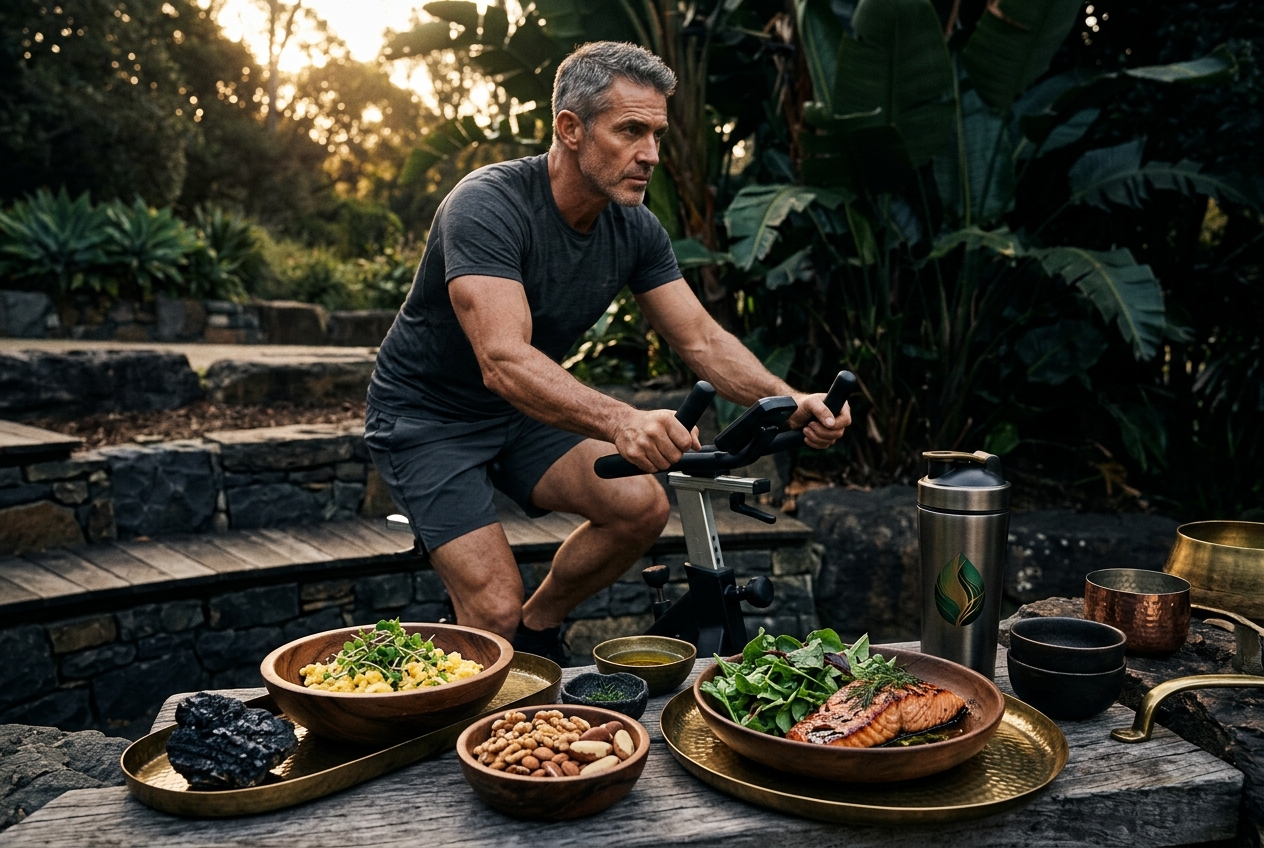
Testosterone is the master hormone of male vitality — it drives energy, muscle mass, libido, mood, and mental sharpness. Yet millions of men walk around with clinically suboptimal levels, chalking the symptoms up to "just getting older." The truth? There are proven, evidence-backed strategies that can meaningfully shift your testosterone in a matter of weeks — no prescriptions required.
This guide covers everything: how to increase testosterone levels quickly through lifestyle changes, what to eat to increase testosterone, the best supplements to increase testosterone naturally, and dedicated advice for men over 50 who need a more targeted approach.
What You'll Learn
- Why Testosterone Drops (And Why It Matters)
- Fastest Natural Ways to Boost Testosterone
- Best Foods to Increase Testosterone
- Best Supplements to Increase Testosterone
- Natural Ways to Boost Testosterone in Men Over 50
- How to Increase Testosterone to 1000 ng/dL Naturally
- Warning Signs of Low Testosterone
- Frequently Asked Questions
1. Why Testosterone Drops — And Why It Matters
After age 30, most men lose about 1–2% of their free testosterone per year. By their 40s and 50s, many are operating at half the levels they had at 25. This isn't just a number on a lab report — the downstream effects touch nearly every system in your body:
- Chronic fatigue — even after a full night of sleep (see our deep dive on why men lose energy after 40)
- Loss of lean muscle mass and accumulating belly fat despite no diet changes
- Declining libido and sexual performance
- Brain fog, low motivation, and mood crashes
- Reduced bone density increasing fracture risk over time
The good news: testosterone is remarkably responsive to the right inputs. You don't need to accept decline as inevitable.
2. How to Increase Testosterone Levels Quickly: The Fastest Natural Methods
2a. Heavy Compound Resistance Training
Of all exercise types, heavy compound lifting (squats, deadlifts, bench press, rows) produces the largest acute testosterone spike. A 2021 meta-analysis confirmed that resistance training significantly elevates both total and free testosterone — especially in men over 40. Aim for 3–4 sessions per week using weights heavy enough that you reach near-failure in the 5–8 rep range. This is the single fastest lifestyle lever available.
2b. Prioritise Deep Sleep (The Testosterone Factory)
The majority of your daily testosterone is synthesised during deep sleep. Studies show that sleeping less than 5 hours can reduce testosterone by up to 15% in just one week. Target 7–9 hours in a cool, dark room. For more actionable lifestyle strategies, see our guide on 15 male health hacks that actually move the needle.
2c. Crush Cortisol — The Testosterone Killer
Cortisol and testosterone have an inverse relationship: when one goes up, the other goes down. Chronic stress is one of the fastest ways to tank your hormones. Proven cortisol-reduction strategies include daily meditation or breathwork, limiting caffeine after 1 pm, cold exposure/contrast showers, and adaptogenic herbs like Ashwagandha (discussed below).
2d. Maintain a Healthy Body Fat Percentage
Adipose tissue (body fat) — especially belly fat — contains aromatase, an enzyme that converts testosterone into estrogen. The leaner you are, the more testosterone your body retains as active testosterone. Even a 5% reduction in body fat can produce a clinically meaningful bump in free testosterone.
2e. Limit Alcohol
Alcohol directly suppresses the hypothalamic-pituitary-gonadal (HPG) axis — the hormonal command chain responsible for testosterone production. Even moderate chronic drinking has been shown to reduce testosterone by 6–7%. Cutting alcohol is one of the most underrated quick wins for hormonal optimisation.
Want a Clinically-Supported Head Start?
HorseFil combines the most effective testosterone-supporting botanicals — Tongkat Ali, Ashwagandha, Maca Root, and Zinc — into one powerful daily formula backed by a 180-day money-back guarantee.
See the HorseFil Formula →3. How to Increase Testosterone Levels Quickly by Food
Your diet is the foundation of your endocrine system. No supplement can out-perform a fundamentally broken nutritional base. Here are the best foods to increase testosterone — each backed by research:
Whole Eggs
Rich in cholesterol (testosterone precursor), Vitamin D, and protein. Don't skip the yolk.
Fatty Fish
Salmon, sardines, mackerel — loaded with Vitamin D and omega-3s that support Leydig cell function.
Oysters
The #1 dietary source of zinc — the mineral most directly linked to testosterone biosynthesis.
Cruciferous Veg
Broccoli, kale, and cauliflower contain DIM, which helps the body metabolise and excrete excess estrogen.
Avocado
High in monounsaturated fats and boron — a trace mineral shown to increase free testosterone significantly.
Pomegranate
A 2012 study found daily pomegranate juice increased salivary testosterone by 24% in just two weeks.
Brazil Nuts
One of the richest sources of selenium — critical for testicular function and sperm production.
Extra Virgin Olive Oil
Supports conversion of cholesterol into testosterone in Leydig cells. See the full research breakdown.
Lean Beef / Lamb
Animal protein with zinc, iron, B12, and saturated fats — all necessary for steroidogenesis.
Pumpkin Seeds
Packed with zinc and magnesium. Read our full guide on pumpkin seeds for male health.
Garlic
Contains allicin, shown to reduce cortisol — freeing up more testosterone from SHBG binding.
Spinach
High in magnesium — a mineral that binds to SHBG and helps free up bioavailable testosterone.
4. Supplements to Increase Testosterone: What Actually Works
The supplement market is flooded with products making wild claims. Below is a data-driven breakdown of what supplements increase testosterone the most, ranked by clinical evidence. For a broader comparison of top male formulas, see our guide on best male health and sex supplements.
| Supplement | Primary Mechanism | Evidence Level |
|---|---|---|
| Tongkat Ali (Eurycoma longifolia) Top Pick | Reduces SHBG → increases free testosterone; reduces cortisol | Strong — multiple RCTs in men |
| Ashwagandha (KSM-66) | Adaptogen — lowers cortisol, directly supports LH and FSH signalling | Strong — 300–600 mg/day shows 15–17% T increase |
| Zinc | Essential cofactor for testosterone biosynthesis enzymes | Very strong — deficiency directly causes low T |
| Vitamin D3 | Acts as a steroid hormone precursor; androgen receptor sensitiser | Strong — 3,332 IU/day showed 25% T increase in 1 year |
| Magnesium (Glycinate/Malate) | Reduces SHBG binding; improves sleep quality → more nocturnal T production | Moderate-strong |
| D-Aspartic Acid (D-AA) | Stimulates LH release → signals testes to produce more testosterone | Moderate — works best in clinically low-T men |
| Maca Root | Supports libido and energy; balances endocrine signalling | Moderate — strong for libido, less direct for total T |
| Fenugreek | Inhibits aromatase (converts T to estrogen); raises free T | Moderate — multiple human trials show benefits |
When shopping for supplements, prioritise products that combine several of these ingredients in clinically relevant dosages. Formulas like HorseFil are engineered to deliver synergistic combinations (Tongkat Ali + Ashwagandha + Maca + Zinc) that work together more powerfully than any single ingredient alone. For a deeper look at Tongkat Ali specifically, read our article on Tongkat Ali benefits for men.
5. Natural Ways to Boost Testosterone in Men Over 50
The game changes after 50. SHBG levels rise (binding more testosterone and making it unavailable), Leydig cell function declines, and recovery takes longer. But the decline is manageable with the right protocol.
5a. Strength Train — But Recover Smarter
Men over 50 should still prioritise heavy compound lifting, but recovery becomes even more critical. Overtraining elevates cortisol and can suppress testosterone. Limit intense sessions to 3x per week. For in-depth guidance on male performance at any age, see our dedicated guide.
5b. Get Your Vitamin D Level Tested
Studies show up to 75% of men over 50 are Vitamin D deficient — one of the strongest independent predictors of low testosterone. A 25-OH Vitamin D blood test is cheap and reveals your status. Target 50–80 ng/mL optimal range.
5c. Optimise Zinc and Magnesium
Absorption of both minerals declines with age. Men over 50 are particularly prone to zinc deficiency due to reduced gastric acid production. Supplementing 25–40 mg/day of zinc and 300–400 mg/day of magnesium glycinate can produce meaningful improvements in both testosterone and sleep quality.
5d. Explore Botanical Adaptogens
Adaptogens like Ashwagandha and Tongkat Ali have been specifically studied in middle-aged and older men with impressive results. A 12-week study of men aged 40–70 using Tongkat Ali found significant improvements in testosterone, libido, and wellbeing scores. If you're concerned about common male health issues after 50, adaptogens are one of the most evidence-backed natural interventions available.
5e. Reduce Endocrine Disruptors
Plastics (BPA, phthalates), pesticide-laden produce, and certain personal care products contain xenoestrogens — compounds that mimic estrogen and suppress testosterone. Switch to glass or stainless containers, choose organic for the "Dirty Dozen," and audit your grooming products for parabens and phthalates.
6. How to Increase Testosterone to 1000 ng/dL Naturally
The "1000" target (1000 ng/dL total testosterone) represents the upper-normal range of a healthy young male. While not everyone's body will reach this, optimising every variable below can push most men well above the deficiency threshold and into the optimal zone.
- Compound resistance training 3–4x/week at high intensity
- 7–9 hours of uninterrupted sleep (testosterone is synthesised during sleep)
- Body fat below 18% (reduces aromatase load)
- Zinc 30 mg + Vitamin D3 5,000 IU + Magnesium 400 mg daily
- Tongkat Ali 200–400 mg + Ashwagandha 300–600 mg standardised extract
- Mediterranean-style diet with emphasis on cholesterol-rich whole foods
- Stress management: 10–20 min daily breathwork or meditation
- Zero or minimal alcohol
- Eliminating BPA and xenoestrogen exposure
Men who implement all of these simultaneously consistently report measurable shifts in energy, body composition, libido, and mood within 4–8 weeks. For a complete lifestyle framework, our article on what is male vitality and how to restore it naturally is a great companion read, as is our guide on how to boost stamina naturally.
7. Warning Signs of Low Testosterone You Shouldn't Ignore
- Persistent fatigue and low energy that sleep doesn't fix
- Declining libido or difficulty with sexual function
- Loss of muscle mass despite regular training
- Increased body fat, especially around the abdomen and chest
- Low mood, irritability, or clinical depression
- Brain fog, poor concentration, and reduced drive
- Reduced morning erections
- Hair thinning or increased body hair loss
If you recognise 3 or more of these symptoms, having your testosterone tested via a simple blood panel is worthwhile. Ask your doctor for a Total Testosterone, Free Testosterone, LH, FSH, SHBG, and Vitamin D panel for a complete picture.
Results may vary. Individual differences in diet, lifestyle, and health status will affect outcomes.
8. Frequently Asked Questions
How quickly can I increase testosterone naturally?
Some changes — like improving sleep quality and reducing cortisol — can shift your levels within days. Resistance training produces an acute spike within hours of a session. Sustained supplementation with Tongkat Ali or Ashwagandha typically shows measurable results in blood work at the 4–8 week mark. Full optimisation usually takes 3–6 months to stabilise at a higher baseline.
What is the single most effective supplement for testosterone?
Based on clinical evidence, Tongkat Ali (standardised Eurycoma longifolia extract) is the most consistently well-documented botanical for directly supporting free testosterone in men. However, the most effective approach combines Tongkat Ali with Ashwagandha, Zinc, and Vitamin D3 in a synergistic formula — which is exactly what HorseFil provides.
Can food alone significantly raise testosterone?
Yes — especially if you are deficient in zinc or Vitamin D, correcting these through diet alone can produce noticeable hormonal improvements. Most men get the best results by combining a testosterone-supportive diet with targeted supplementation and lifestyle changes. Think of food as the non-negotiable foundation and supplements as the accelerant.
Is it safe to try to increase testosterone without a doctor?
The lifestyle and supplementation strategies described in this article are safe for the vast majority of healthy adult men. However, we always recommend consulting your doctor before adding any supplement regimen — especially if you have a pre-existing health condition or are taking medications. These strategies are categorically different from Testosterone Replacement Therapy (TRT), which requires physician oversight.
What is the normal testosterone range for men over 50?
Standard reference ranges vary by lab, but total testosterone is generally considered normal between 300–1000 ng/dL. Many functional medicine practitioners consider the optimal zone to be 600–900 ng/dL for sustained vitality. Men over 50 should also check their free testosterone, which is often more clinically relevant than total testosterone alone.
Related Reading
- Tongkat Ali Benefits for Men: What the Research Says
- Best Male Health Supplements: What to Look For
- What Is Male Vitality? A Complete Guide to Restoring It Naturally
- Pumpkin Seeds Benefits for Male Health: What the Science Says
- Does Olive Oil Improve Male Health? Here's What the Research Shows
- Why Do I Feel Tired All the Time After 40? The Science of Male Energy Loss
- 15 Male Health Hacks That Actually Move the Needle
- How to Increase Stamina Naturally for Men
- Best Male Performance Supplements: Top Ingredients That Actually Work
- Common Male Health Issues at Every Age
Scientific References
- Leproult, R., & Van Cauter, E. (2011). Effect of 1 week of sleep restriction on testosterone levels in young healthy men. JAMA, 305(21), 2173–2174.
- Tambi, M. I., et al. (2012). Standardised water-soluble extract of Eurycoma longifolia (Tongkat Ali) as testosterone booster for managing men with late-onset hypogonadism. Andrologia, 44(Suppl 1), 226–230.
- Wankhede, S., et al. (2015). Examining the effect of Withania somnifera supplementation on muscle strength and recovery. Journal of the International Society of Sports Nutrition, 12(1), 43.
- Pilz, S., et al. (2011). Effect of vitamin D supplementation on testosterone levels in men. Hormone and Metabolic Research, 43(3), 223–225.
- Prasad, A. S., et al. (1996). Zinc status and serum testosterone levels of healthy adults. Nutrition, 12(5), 344–348.